Peter Bryce Debunked the Myths of His Time

It is easy to stand back from the story of Peter Henderson Bryce, and wonder just what all the fuss is about.  After all, as my second cousin David put it, “He was only doing his job.” It is the summer of 2014, the day after a Bryce family reunion where I had met dozens of other descendants of Peter Bryce – people I didn’t even know existed just a few months before.  We are sitting around the remains of breakfast when the topic comes up.  In today’s context, the actions of Peter Bryce seem relatively innocent; he was asked to go out and report on the conditions in residential schools and make recommendations to the government about a course of action, and that’s just what he did.

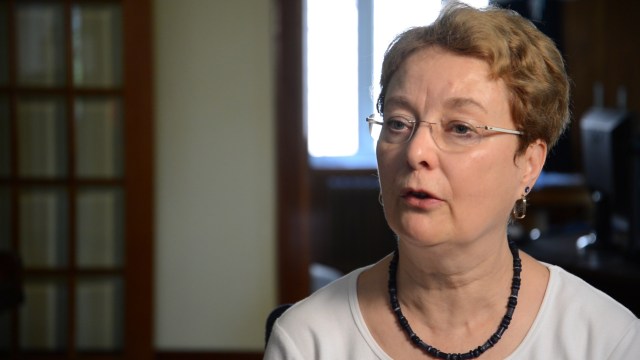
A year after that breakfast, Peter Campbell and I are interviewing Marie Wilson at a ceremony to unveil a plaque in Peter Bryce’s honour at Beechwood Cemetery in Ottawa.  Her very presence at the ceremony means that indeed there was something very special about what Peter Bryce did.

“What is heroic about doing what you should be doing?” asks Wilson.  She was one of three commissioners on the Truth and Reconciliation Commission.  She heard thousands of hours of testimony from residential school survivors, and read over the information and evidence gathered by the Commission.  “What is heroic about doing the right thing?  What is heroic about practicing your profession to the best standards you have sworn your career to?

“It’s heroic because the circumstances and the political framework of the day would not allow him to do the normal right thing,”

Dr. Adam Green agrees; in the late 1990s he was working on his Masters’ degree at Queen’s University when he ran across Peter Bryce.

“I am looking in one class at the early Canadian labour movement; I’m in another looking very much at what is called state formation in the early 20th century.  Ultimately in doing research for two different papers, I come across Peter Bryce and this is because on one hand he is producing material on immigration and manpower, and on the other hand he is also working on the Aboriginal file,” says Green.  We are interviewing him in the dining room of his suburban Ottawa home.  Now Adam Green is a researcher for the federal government who also teaches courses in history at the University of Ottawa.  All around us, just out of camera shot, are high chairs and kids’ toys.  His life has moved on since researching and writing about Peter Bryce, twenty years ago.

“I was shocked that I actually found somebody who was perfectly at the centre of all of this,” says Green.  “From a very human angle he’s turning science into something that is debunking every major myth you can think about in the early 20th century. “

Adam Green’s thesis Humanitarian, M.D.: Dr. Peter H. Bryce’s Contributions to Canadian Federal Native and Immigration Policy, 1904-1921 is probably the most comprehensive look at Peter Bryce available today, and I was lucky enough to find it on my first search.  I clearly remember the winter evening I spent reading the thesis, and waking up a few nights later to refer to it, because something in the thesis had infiltrated my dreams.  I am thrilled to be interviewing him.

“As much as he’s being scientific about it, he’s being very human and saying ‘forget about all of the myths and urban legends, here’s what the hard evidence tells me,’” says Green. “’The evidence tells me that Aboriginals are not by their nature unsanitary, and new immigrants from the steppes of Russia are not unsanitary.’  So while he’s delivering cold hard facts, he’s also flying in the face of what the commonsense knowledge was of new immigrant populations and of Aboriginals and it would be the reverse of what almost every Canadian thinks at the time.”

As we pack up at Adam’s house I remember my parents’ lessons about integrity: “Don’t follow the crowd. Do the right thing.  Stand up for yourself.”  I chat with Adam and help move equipment before driving to our next interview. It is a pretty normal scenario, one I’ve played out dozens of times.  But on the inside I feel different; I feel like now I am more complete.  Now I know where those lessons came from.

https://youtu.be/ACRh6Kr5n7c


The documentary film Finding Peter Bryce is currently in post-production but it needs funding to be completed.  If you are interested in contributing, you can give through our partners, the Canadian Public Health Association and receive a tax receipt in return.  Go to How to donate to the Film to find out more. Click here to see the promotional trailer.   If you have other questions, suggestions or thoughts, please contact me at andyj.bryce@gmail.com

The Twin Legacies of Peter Bryce come together in the Walkerton Tragedy

I first met my cousin Mary Robinson-Ramsay in August 2014 at a family reunion at David Bryce’s cabin.  Mary was from Walkerton, a central Ontario village notorious for an outbreak of E coli from a contaminated town well.  She told me she had been on Walkerton Council in the years leading up to the outbreak in May 2000, and had brought up concerns regarding the water.  As I listened to her in that hot noisy cabin I realized that the legacy of Peter Bryce lives on, and that’s when I decided to do a film on him.

Peter Campbell and I went to Walkerton two years later to interview Mary for the film Finding Peter Bryce.  This was the first stop on a five day whirlwind filming trip in southern Ontario.  We arrived in Walkerton after a five hour flight and a pleasant drive through miles of farmland.  Walkerton is a prosperous small town along the banks of the Saugeen River and it was hard to believe that this had been the site of such a tragedy.

walkerton

Mary had been a witness at the Walkerton Inquiry, and she was mentioned in the report.  On page 236 it describes how Walkerton council had received a report from the Ministry of the Environment which expressed concerns about its water purification system and how the report ended up on the council agenda as an information item.

At that meeting, Mary Robinson-Ramsay, a municipal councilor, expressed her concern about the PUC’s non-compliance and the detection of E. coli bacteria.  From her standpoint, the solution to these problems was to provide what she termed ‘regular and on-going technical expertise.’ She identified the options of either retaining a consulting engineer to take supervisory responsibility or hiring a municipal director of public works.

Council ignored her.  “Their attitude was ‘oh you’re the new kid on the block,’ and I was a new councilor,” she told us.  “So their answer was ‘we’ll get the water guys to look at it.’  But I don’t think they understood fully my concerns.”

Mary knew better because she had grown up being conscious of water quality.

“As a General Practitioner in a small town my Dad was also the medical officer of health and the coroner,” says Mary. “One of my Dad’s duties was to test wells in the area, so sometimes that was a conversation piece around the supper table about a well he was concerned with. I was probably more aware of water than most kids were.”

mary-rr

Mary Robinson-Ramsay

Later Mary and her husband worked in South Africa, where clean water is not a given: “In the country you had to be careful, there was Bilharzia and other diseases around and you had to be more aware.”

Most of us in Canada take for granted that we will have safe, clean drinking water.  But it wasn’t that long ago that drinking water wasn’t that safe or clean.  Devastating outbreaks of water-borne disease were common in the Canada’s early years.  It wasn’t until Peter Bryce and the public health movement established clean water standards that the situation began to change. As well, in the 1880s and 1890s Peter Bryce faced pressure from many councils to relax standards.  One editorial, written in 1904 when Bryce left the Ontario civil service for the federal government said “Dr. Bryce has always turned a deaf ear to salubrious legislators who came with appeals of this kind and was even willing to gently explain that such a request was unintentionally criminal.”

The results of not meeting standards are devastating, as the Walkerton tragedy so well illustrates.  In a town of 5,000 people, there were five deaths, and at least two thousand other people who became seriously ill.   The two men responsible for the tragedy were found guilty of a charge of common nuisance. One spent a year in jail, while the other spent five months under house arrest. The town of Walkerton had to replace parts of its water system.

Peter Bryce’s twin legacies come together in Mary Robinson-Ramsay’s story.  His legacy to the country is a public health system that has helped it prosper and grow.  The legacy to his family can be seen in his descendants – Mary’s father is only one example of a descendant who went into medicine. In another branch of the family is an uninterrupted line of five generations of people in public health.  But Mary’s story describes another, more important legacy – and that is one of telling truth to power as she describes in the clip below.


There is one footnote to leave you with – according to Health Canada there are 138 boil water advisories in 93 First Nations communities in Canada outside of British Columbia.  It seems the standards of clean water which most of us enjoy, are not being met in Indigenous communities. There is still much work to be done.


The documentary film Finding Peter Bryce is currently in post-production but it needs funding to be completed.  If you are interested in contributing, you can give through our partners, the Canadian Public Health Association and receive a tax receipt in return.  Go to How to donate to the Film to find out more. Click here to see the promotional trailer.   If you have other questions, suggestions or thoughts, please contact me at andyj.bryce@gmail.com
Peter Bryce and the Golden Whistle Award


goldenwhistle

“The world is a dangerous place, not because of those who do evil, but because of those who look on and do nothing.”
– Albert Einstein

It’s a wonder anyone blows the whistle on wrongdoing; whistleblowers never fare well in the aftermath.  Take the case of Alan Cutler, for instance.  He was a senior procurement manager at the Ministry of Public Works and Government Services Canada in the mid-1990s when he noticed irregularities in the spending of federal government funds in Quebec.  We now know these irregularities as Adscam, or the Sponsorship Scandal.  Auditor-general Sheila Fraser found about $100 million in fees and commissions was paid to communications agencies in what now looks like a program which was basically designed to generate commissions for these companies.

And Alan Cutler?  In a 2012 article written by journalist Michael Harris, Cutler reveals how he was being watched for insubordination after he blew the whistle.  “For three months, they let me rot. Every working day, nothing to do and no one would take my calls. I spent the mornings writing numerals on a pad — 800, 801, 802 … and then crossed them out in the afternoon. I was literally crossing out time. I played out chess openings in my mind. They wanted to nail me for insubordination, so I remained silent. They were watching everything so I didn’t even read a book. They were listening to everything so I never made a personal call. I went home with blazing headaches and ended up on stress medication.”

Cutler was relatively “lucky” (if you can call it that) – many whistleblowers face worse financial, professional and personal losses.  Eventually he moved on to another ministry, and was exonerated by the Gomery Commission.  On the other hand, Cutler’s boss, Chuck Guite spent 3 and a half years in prison and the scandal helped bring down the federal Liberal government in 2006.

5th Annual National Golden Whistle Award

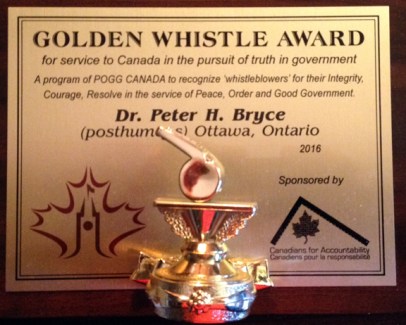
Peter Bryce and Alan Cutler are both recipients of the Golden Whistle Award, presented by Canadians for Accountability and Peace Order and Good Government.  Peter Bryce first blew the whistle on health conditions in residential schools in 1907.  That’s when he reported that 24% of all children in Indian Residential Schools on the prairies were dying of tuberculosis.  He submitted his report to the head of Indian Affairs, Frank Pedley in June 1907.  Pedley and his assistant, the infamous Duncan Campbell Scott, did nothing with it while Bryce issued the report to all MPs and church leaders.  Eventually it was leaked to the Ottawa Citizen which published the details six months later in November 1907.

That’s when the report’s recommendations were called into question and a campaign to undermine my great-grandfather’s credibility was started by Scott. Eventually, when he took over Pedley’s job in 1913, Duncan Campbell Scott told Peter Bryce that the department no longer needed a public health officer, and there was no need to continue issuing reports which showed how poorly the department was handling the public health of Indigenous people.

Bryce took another shot at it in 1922, after he had retired from the civil service and was no longer bound by confidentiality agreements.  In his short book The Story of a National Crime, Bryce recounted his time at Indian Affairs, and blamed the inaction on health issues on Duncan Campbell Scott.  Bryce also outlined how he had been treated by the federal government.  From the beginning of his tenure in 1904, Bryce had advocated for a ministry of public health.  Eventually in 1919 the government called on him to draft legislation for just such a ministry, but it denied Bryce the honour of being the first deputy minister in 1920.  Instead, the government retired him in 1921 and put him on a pension worth about ¼ of his annual salary.

The Indian Residential School program devastated the Indigenous community in Canada for well over one hundred years.  As well, the effects of the system will linger for many years to come, even though the last residential school was closed in 1996.  Just like all whistleblowers, Peter Bryce paid for his revelations financially, professionally and personally.  But we as a society owe Peter Bryce, Alan Cutler and all whistleblowers a debt of gratitude, for as American president Dwight D. Eisenhower said “a people that values its privileges above its principles soon loses both.”


The documentary film Finding Peter Bryce is currently in post-production but it needs funding to be completed.  If you are interested in contributing, you can give through our partners, the Canadian Public Health Association and receive a tax receipt in return.  Go to How to donate to the Film to find out more. Click here to see the promotional trailer.   If you have other questions, suggestions or thoughts, please contact me at andyj.bryce@gmail.com
 

Peter Bryce and the Politics of Fear and Hatred

I seem to relate everything to Peter Bryce these days, and in the aftermath of Donald Trump’s win this week I found myself linking Peter Bryce to the news of the day through the lens of immigration.  As has been well-outlined in the last few months, Trump’s position on immigration is exclusionary and based on the politics of fear and hate.  On his website, Trump proposes building a wall between Mexico and the U-S, vetting immigrants to see if they share American values, and restricting immigration from places where terrorism is active.  It seems Trump and his supporters only want immigrants who fit a narrow profile.   This is not the first time that race and immigration have been tied together – they have also been issues in Canada.

Well before Peter Bryce joined the federal government, Canada first faced the issue of race and immigration.  In the country’s early years, the government’s plan was to populate the prairies with the poor of Great Britain.   This proved to be a disaster because poor immigrants from the slums of Britain’s big cities had no idea how to farm, much less survive the brutal weather extremes of the prairies.  In 1896 Clifford Sifton, Minister of the Interior in the Laurier government, promoted the idea of bringing in immigrants from places like Scandinavia, Germany and the steppes of eastern Europe.  Despite protests from Canadians who wanted the country to be populated only by the British, this radical idea worked, and more than two million immigrants would pour into the country in the next few years.

clifford_sifton_2

Sir Clifford Sifton

Peter Bryce was a supporter of immigration, and that may surprise many who see him strictly as the man who lobbied for better health conditions among Indigenous people.  He was a believer in the colonial approach to economics and he saw Canada as an empty land full of economic potential; all it needed was a willing workforce to make it happen.  Bryce also believed that Canada’s future lay in being an agrarian superpower, with numerous small communities servicing a vast agricultural factory which would help feed the world.

As the chief bureaucrat for the board of health in Ontario, he worked to improve health conditions for immigrants who were flooding into the slums of Toronto, and actively fought racism caused by the belief that immigrant populations brought disease to the city.  Later in the federal government, he was the chief medical officer for two departments:  Indian Affairs, and Immigration.   His biggest impact in the Immigration department was the construction of hygienic and efficient immigration depots, and screening for communicable diseases.

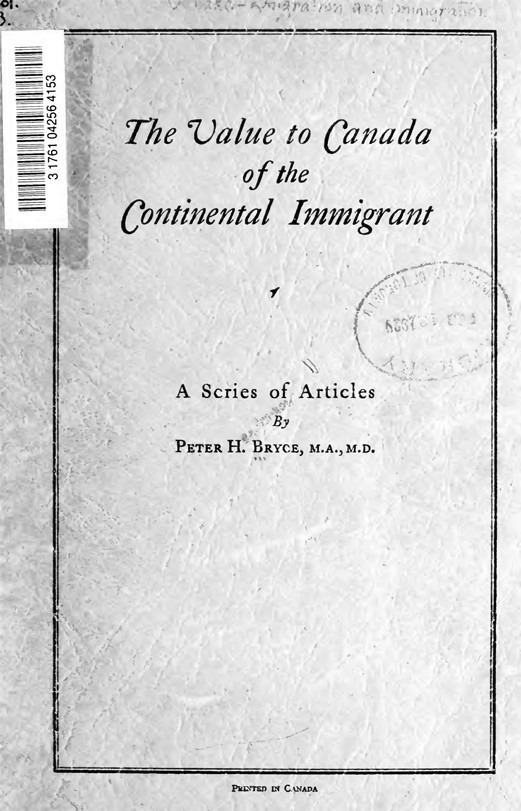
But his support of immigration went deeper than that.  In 1928, long after he had retired, Bryce published a collection of papers called The Value to Canada of the Continental Immigrant.  The impetus for this collection was the narrative of the day that immigrants were to be feared because of their differences.  By this time Bryce was in his mid 70s, but he had spent six months travelling Canada to visit many of the communities which arose from the immigration first promoted by Sir Clifford Sifton, who he also interviewed.

The value to Canada of the continental immigrant: a series of ar

Among the places he visited were Castlegar B.C., where he spent a day with Doukhbours who had been persecuted in Russia because of their radical views.  He also travelled to the Selkirk region of Manitoba, and central Saskatchewan and Alberta where communities of Scandinavians, Germans, and Ukrainians had been established.  Bryce’s theme was consistent; these people shared Canadian values, and they were working hard to bring wealth to their communities and to the country in general.

Today among my friends and family are the descendants of those immigrants. My brother’s wife is from the German community in Fort Saskatchewan; my wife’s sister is married to a descendant of the Scandinavian community; a friend and colleague is a descendant of the Doukhbour community.  The fact that we mix so easily and yet celebrate our ethnic backgrounds contradicts the racist politics which characterized Donald Trump’s campaign, and reminds me that strong voices like Peter Bryce’s are needed today, more than ever.

The ghost of Duncan Campbell Scott haunts the halls of INAC

I couldn’t help thinking of Duncan Campbell Scott when I read Doug Cuthand’s article this weekend.  Cuthand is a member of the Little Pine First Nation and a columnist for both the Saskatoon Star-Phoenix and Regina Leader-Post.  Before making his living as filmmaker and writer, Doug Cuthand spent fifteen years with the Federation of Saskatchewan Indian Nations.  He is well-qualified to write about Indigenous issues.

In a column published November 5 called Replace hidebound INAC with a 21st century ministry, Cuthand takes a critical look at Indigenous and Northern Affairs Canada and calls on the government to replace it with something more modern, and less redolent of the colonial era of Canada’s development.

“It also has a long history of meddling in First Nations affairs and providing substandard services,” says Cuthand. “The department has been a law unto itself for generations.”

Well, definitely since 1913 when the department came under the control of Canada’s mandarin/poet Duncan Campbell Scott.  This was a man who joined the department in 1879 (when family friend Sir John A. MacDonald recommended him) and left in 1932 – a 53 year career in one department.  No one person left a greater stamp on Indian Affairs than Duncan Campbell Scott.

duncan-campbell-scott-library-archives-canada

Duncan Campbell Scott

It was Scott who advocated for the assimilation of Indigenous people, and increased residential school attendance from 11 thousand in 1913 to 17 thousand students in 1932.  He did this by forcing students to go to residential schools, all the while knowing of the health problems at those schools, and failing to get enough money to adequately pay for their care, feeding and education.  Scott was the most parsimonious of bureaucrats, ultimately valuing dollars over lives.   This could well have been due to his belief that Indigenous people would disappear because of their perceived “inferior qualities.”  In 1920 he explained in parliament

I want to get rid of the Indian problem. I do not think as a matter of fact, that the country ought to continuously protect a class of people who are able to stand alone… Our objective is to continue until there is not a single Indian in Canada that has not been absorbed into the body politic and there is no Indian question, and no Indian Department…

Of course there was one voice that said these people could stand on their own, given half a chance.  That voice belonged to my great-grandfather, Dr. Peter Henderson Bryce and he had the evidence to back up his statement.  One of the first things Bryce did when he was hired in Indian Affairs in 1904 was study the evidence to see if the myth that Indigenous people were spiritually, emotionally and physically inferior was true.  Bryce’s minister, Sir Clifford Sifton had said just that in a committee meeting in 1900, so it was a career-limiting moment when Bryce reported that there was no indication of physical inferiority in Indigenous people.  What he did find instead was that European people who lived in the same conditions as Indigenous people had similar rates of disease and mortality. This was not news that the penny-pinching Duncan Campbell Scott would have welcomed, so instead Scott did his best to discredit my great-grandfather.

“It was Duncan Campbell Scott who received Peter Bryce’s report (on conditions in residential schools) and moved to suppress that report and discredit your great-grandfather,” says Cindy Blackstock.  When Duncan Campbell Scott became deputy superintendent of Indian Affairs in 1913, he relieved Peter H. Bryce from his duties as Chief Medical Officer, and discontinued the practice of issuing an annual report on the health of Indigenous people.

The First Nations case against the Federal government at the Canadian Human Rights Tribunal proved that the federal government spends less on social services for Indigenous children than on non-Indigenous children.  I also note that INAC lapsed (meaning “didn’t spend”) 900 million dollars last year.  These two facts alone make me think Mr. Cuthand has a good point – it seems not much has changed since the colonial days of Duncan Campbell Scott and Peter H. Bryce.


Long Threads Running Deep

champlain_fall_1024

There have been moments in the last few years when the threads of my past have come together in the journey to find Peter Bryce, and each time it has happened, I have reflected on how this story has been all around me, for so long.  One source of many of these threads has been Trent University where I graduated with a B.A. in November 1979.

The first thread connected to Trent is that one of the historians I found in my early work on Peter Bryce was a woman named Dr. Nancy Christie, who had done significant research on the Social Gospel movement.  Peter Bryce was a member of the Social Gospel which  recognized the problems inherent in the industrialized society of the 19th century and proposed proactive solutions.  He was an important Social Gospel figure because of his role in public health – a proactive way for government to improve the health of all.   I knew Nancy Christie as an undergrad at Trent – it was a very small place at the time with a student population not much larger than an urban high school.

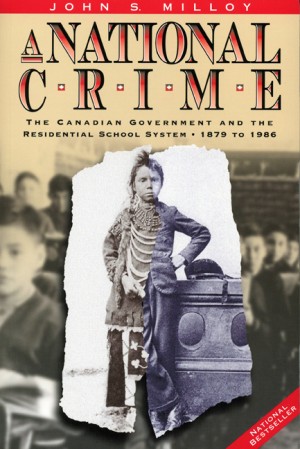
As it turned out Nancy’s research was on a totally different aspect of the Social Gospel but the second connection to Trent was very strong.  One of the most important books on residential schools was Dr. John Milloy’s  A National Crime.  Even though it was published almost twenty years ago, Milloy’s book stands as an excellent overview of the Indian Residential School system.  We had the pleasure of interviewing John in his Ballieboro home last spring for the documentary Finding Peter Bryce – he had just retired from his career as a professor of history at Trent.

national-crime

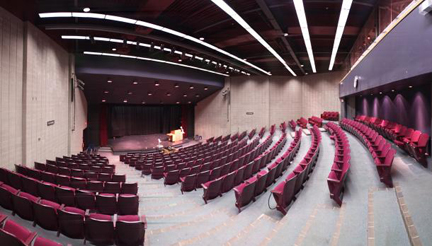
But it is the third connection with Trent which perhaps touches me the most – and that is Wenjack Theatre.  I can recall many hours of lectures at Wenjack Theatre – it was a main lecture hall and pretty much everyone who went to Trent in my time has taken lectures there.  Of course, most of the rest of us are now familiar with the Wenjack name because Gord Downie has just released The Secret Path – a CD, graphic novel and animated film about the story of Chanie Wenjack, who froze to death trying to escape Cecilia Jeffrey Residential School in Kenora.  His home was almost a thousand kilometers away and he tried to walk home with no food or shelter and wearing only a windbreaker.  Downie’s work is a deeply sad insight into the despair which many of these children felt.

According to the Trent University website, when Otonabee College was being built in 1973 a group of students from what is now the Indigenous Studies department successfully lobbied to have the theatre named after Chanie (who was called Charlie in the official records) Wenjack.  According to a release from the university in September 2016, “The students saw this dedication as an opportunity for Trent to strengthen its Indigenous Studies program, and establish itself as a force for change, hope, and a positive educational experience.”

wenjack-theatre

Wenjack Theatre

I learned about the Chanie Wenjack story when a friend of mine told me about it in 1978.  At the time the story had no resonance for me.  It wasn’t until a few years ago when I started hearing testimony from the TRC and researching my great-grandfather that the importance of that name became clear. When I heard about Downie’s project I thought back 38 years.  These threads have been with me for a long time and seem to run a long way.

The Peter Henderson Bryce Award

The first time I contacted the First Nations Caring for Children Society was because of the Peter Henderson Bryce Award.  At the time I had just begun researching my ancestor, and a search of the web had led me to the award page.  I was excited – just a few months before I barely knew anything about great-grandfather, and now I was finding someone who wanted to honour him for his work on residential schools.

I e-mailed the organization to talk about the write up for the award and ask about the Society.  Within a day or two I was talking on the phone with Cindy Blackstock, the executive director of the organization.  “We’ve been looking for you,” she said.  “We’ve looked all over for descendants of Peter H. Bryce and you’re the first one we’ve found.”  By the end of the phone call, we had covered an immense amount of ground and Cindy had asked me to be on the jury for the award, which I have been on ever since.

cindy-and-i

Giving out the Peter Henderson Bryce Award on Parliament Hill

Over the years the award has morphed into a two part affair.  Every second year the award is given out to someone who has produced outstanding work for the health and well-being of Indigenous children.  The first winner was Dr. Kent Saylor, a pediatrician from Montreal who worked in Indigenous public health at McGill, and also travelled up to the Hudson’s Bay watershed twice a year to work with Cree children.  Last year Alanis Obomsawim won for her long career in social justice documentary film-making, especially her film Hi-Ho Mistahay about the Shannen’s Dream movement.

But this is an alternate year, and in those years the award goes to children who have “individually or in groups advocate for the safety, health or well-being of First Nations, Métis and Inuit children and youth.”  In recognition of Peter Bryce’s struggles in the Department of Indian Affairs, the award emphasizes people and groups who have had to overcome obstacles in the process.

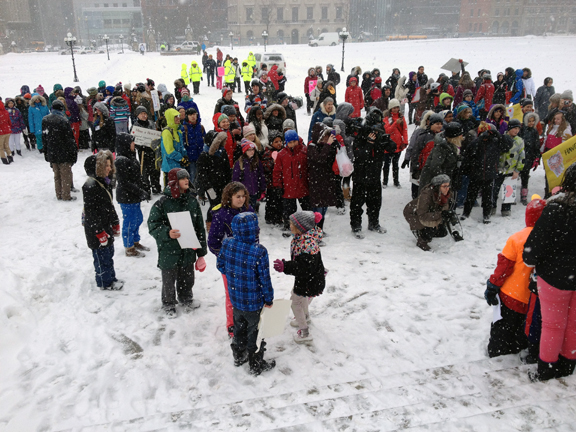
The first winners of the children’s award were the Shannen’s Dream Club of Pierre Elliot Trudeau School in Gatineau Quebec.  These kids have given speeches and workshops and travelled all over to talk about Shannen’s Dream – they even presented to the Truth and Reconciliation Commission at the Montreal hearings.   I had the pleasure of giving these kids the award at a very cold, snowy ceremony on Parliament Hill in February 2014.

givign-award

February 2014

crowd-i

A good crowd, despite the weather

Now that the National Truth and Reconciliation Commission has issued its report, and Canada is beginning the path to reconciliation the involvement of our youth is crucial.  That’s why I was so pleased that we managed to partner with the National Centre on Truth and Reconciliation to produce Finding Heart for students in elementary and middle schools.  After finding out about the heart garden project, and working on the film I am curious and excited to hear what has been happening out there.  If you know of a youth group or individual who has advocated for Indigenous children, take a look here at the award write-up and follow the links to submit a nomination.  If you have any questions, send me an e-mail at andyj.bryce@gmail.com and I will try to answer or at least get you in touch with someone who can.
Ellie Kerr – A Life Well-lived

ellie-kerr_17018

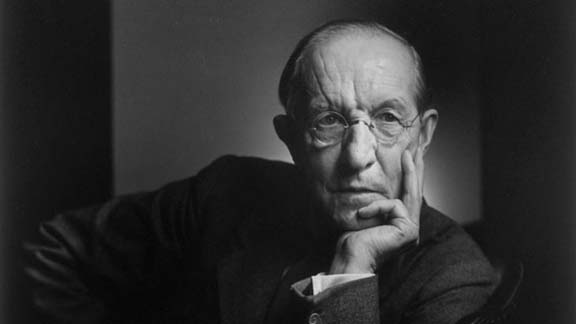
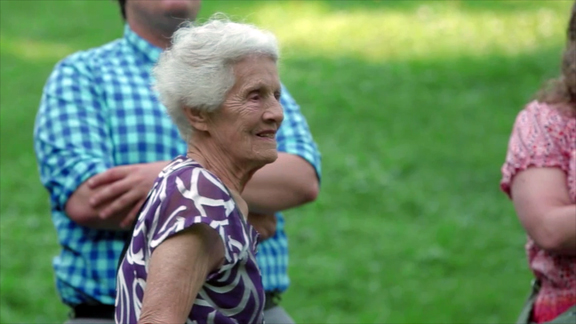
It was August of 2015 and we were on the last shoot of what had been a busy road trip. For five days Peter Campbell and I had been shooting  for the documentary Finding Peter Bryce, and now we were going to interview 92-year-old Ellie Kerr. We were both tired from the shooting schedule and the heat, but we knew Ellie was energetic – we had watched her speak in front of a crowd of strangers just a few days before at a ceremony at Beechwood Cemetery for Dr. Peter H. Bryce.

ellie-5623

“I remember him as a very warm, compassionate sort of person. Not soppy compassionate but he cared about people that was his main thing, and especially children,” she told the crowd of family and dignitaries.

Among the people at that ceremony were Perry Bellegarde, the chief of the Assembly of First Nations; Marie Wilson, a commissioner from the Truth and Reconciliation Commission; and Cindy Blackstock the executive director of the First Nations Caring for Children Society.  They were all there to see an historical plaque unveiled at the gravesite of Peter Bryce.  Ellie was the matriarch of the Bryce family, and the last person alive who had memories of him.

I also wanted to meet her because of Ellie’s remarkable life.  She was born in 1923 and lived much of her youth in Japan.  Her father Cuthbert Robinson and mother Jean (Bryce) Robinson, ran an International School in Nagoya and except for a few furloughs the family had spent all of its time there until the late ‘30s when they left because of the impending war.

At university Ellie met the love of her life – an anthropology student named Moose Kerr.  The summer after they got married Ellie and Moose were on the west coast of Hudson’s Bay where Moose was doing research for his Master’s degree, and where Moose and Ellie fell in love with the Indigenous people of the area.  When he finished his degree, Moose got a posting as a teacher and principal in Aklavik, Northwest Territories and that’s where the family spent the next 12 years.

Ellie met me that afternoon with a big hug.  In Ellie’s granny flat were pictures of their time in Aklavik.  She told us stories of her life there – things like gatherings at the village hotel, and how locals would play traditional music and dance.  At the time the federal government wanted to move everyone out of Aklavik to the new town of Inuvik.  Moose helped them fight to stay, and when a new school was built there, locals insisted it be named after Moose Kerr.  When their five daughters got older Moose and Ellie moved to Ottawa and settled in for the long term.  Moose had died just a few years before and now Ellie was living at her daughter Peggy’s, and swimming fifty laps a day despite losing most of her sight to macular degeneration.

phb_ellie_2

I showed her a picture of her as a child, sitting on Peter Bryce’s lap and after looking at it through a magnifying glass she proclaimed in a mocking tone, “I don’t look very happy, do I?  I’m ashamed.” I got her to talk about Peter Bryce and she told a story of sitting in a garden with him while he told her about tomatoes.  I asked her if her mother ever talked about Peter Bryce’s role in uncovering health conditions at residential schools.

“We never talked about it,” she says. “It was a sore topic – the poor guy was in disgrace.”  She confessed that like the rest of us, she only found out about his role in the residential school story about five years before.

Peter and I shot with her for a couple of hours and after we wrapped up, her daughters Karen, Sharon, Mia, Mora and Peggy sat down with us and chatted over pie and coffee.  That was the last time I saw Ellie; she died in June this year at age 93. When I heard the news I thought back to that afternoon and remembered her vitality and warmth – it was hard to believe she was gone. Rest In Peace Ellie –  you lived an extraordinary life.

Big News to start the New Year

I have some great news to start off 2016 – we (Peter Campbell of Gumboot Productions and I) are finalizing a collaboration with the National Centre for Truth and Reconciliation (NCTR) to produce a 20 minute educational film about Peter Bryce.   Of course, I am thrilled about this; the primary reason I embarked on this journey to find Peter Bryce is to give my ancestor the recognition he deserves. Putting this kind of material in front of school children goes a long way to meeting that goal.

We plan to have this production ready by the end of March, and that means we have a busy few months ahead of us. We are still working on the full documentary and we need to complete one more principal shoot in the spring. I will be spending much of this winter organizing that shoot, and finding funds to complete the longer film as well as writing and producing the educational film.

This educational film caps off a tremendous year for us. In March, we attended and filmed the naming ceremony for the Waakebiness-Bryce Indigenous Health Institute at the University of Toronto. We followed that up with a week-long shoot in Ottawa where we filmed the unveiling of an historical plaque honouring Peter Bryce at Beechwood Cemetery, visited Peter Bryce’s home in Rockcliffe and interviewed a wide variety of people, including Ellie Kerr – a grand-daughter of Peter Bryce who is perhaps the only person alive who remembers him.

Finally, I would be remiss if I didn’t tell you about Charlene Bearhead, one of the key figures in this initiative. We first met her at the unveiling ceremony at Beechwood. Charlene is the Education Lead at the NCTR and it is her job to collaborate with Ministries of Education, school authorities, and Universities. She also supports the work of educators across the country to ensure that the critical truth about the history of Indian Residential Schools and reconciliation education are being delivered in classrooms.. Charlene told us how excited she was about the documentary, and followed up that conversation with a meeting in the fall – and that’s when the educational film really began to take shape. Her advocacy and appreciation of the story of Peter Bryce has given us extra momentum going into 2016, which promises to be an important year in the journey to find Peter Bryce.